Daulatabad, Gurugram|ISO Certified
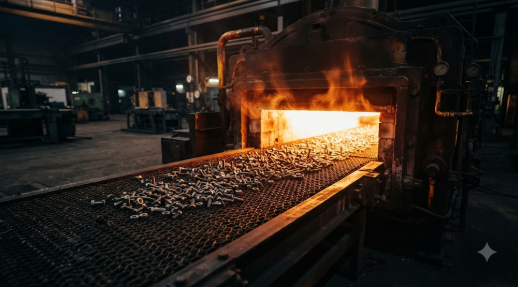
Two things decide service: how strong it is, and how long it survives rain, road salt and time. Heat treatment looks after first. Surface finishing looks after second.
Parts heated until structure transforms, quenched to lock hardness, then tempered at lower temp to bring back toughness.
Self drilling screws need hard wear-resistant skin + soft core. Point must cut steel sheet, core must not snap under driving torque.
Drawing sets class. Hardness tested after HT, mech tests when spec calls. Lot checked before forward.
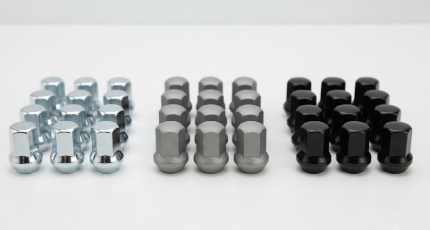
Protect against rust, first. But on fastener, coating also affects friction. Friction decides how much tightening torque becomes clamp force. Two bolts same torque, different coatings = different clamp loads. That's why automotive drawings specify friction range + coating.
During pickling & electroplating, hydrogen can enter steel. In hard parts, typically class 10.9+, it causes delayed fracture hours/days after tightening.
Coating adds thickness. On thread, thickness multiplied — builds on both flanks. If not allowed for, good thread stops accepting gauge after plating. We size threads before coating with this in mind.
Usually neither. Typically plain so they weld well.
Zinc flake common, but vehicle maker standard decides.
Share standard and we'll confirm.
No. Too thick and thread won't assemble.
Share spec at info@fastenertech.in — we'll confirm right treatment & finish.