

You Have A Drawing. We Make It Real.
Buyers tell us uncertain bit isn't price — it's not knowing how new supplier handles development. Will they understand part? Flag problems early? Will samples match drawing? Here's our process, step by step.
The Five Steps — No Surprises
Everything begins with your enquiry. We look at geometry, material, application — knowing function tells which tolerances protect performance.
Drawing or RFQ
Send drawing or sample if no drawing. We ask rather than assume.
- Geometry: shape, critical features
- Material grade & strength, application
- Unclear? We ask before quote
Process Sequence
Which machine, how many stations, what at each.
- Even work = tools last, no cracks
- Poor sequence = cracked parts
- Heat treat & finish clear
Tooling
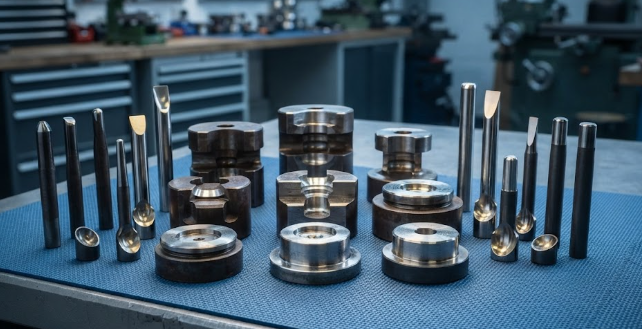
Each new part needs own dies & punches.
- Quoted separately
- Main upfront cost
- Makes part cheap after
Trial & Sample
First parts measured vs drawing, adjust if needed.
- Samples for your check
- Nothing to prod until approval
- Sample only? We prepare drawing
Production — Locked
Once approved, stabilize process, settings recorded.
- Every lot = approved sample
- In-process + final dims
- Lot ID for traceability
Design For Forging
Small choices make forging easier.
- Generous radii, not sharp corners
- Even wall thickness
- Avoid undercuts/side holes
- Only needed tight tolerances
What To Send With RFQ
Complete enquiry = faster, accurate quote. Send what you have, we work rest together.
What You'll Get Back
• Feasibility: can we make it, any concerns?
• Suggestions: changes that improve quality or reduce cost
• Part price based on qty + Tooling cost separate
• Timeline for samples + assumptions made
Converting existing part? Machined/cast/tube currently? Send it — we study if forging better/cheaper, straight answer either way.
Submit An RFQ — info@fastenertech.in
How long? Depends on tooling complexity — timeline with every quote
